
LPG distribution
The truck was already headed that way.
“You run out of gas. You write, you wait, you ask the price, you wait again. You still haven't ordered anything.”
LPG distribution
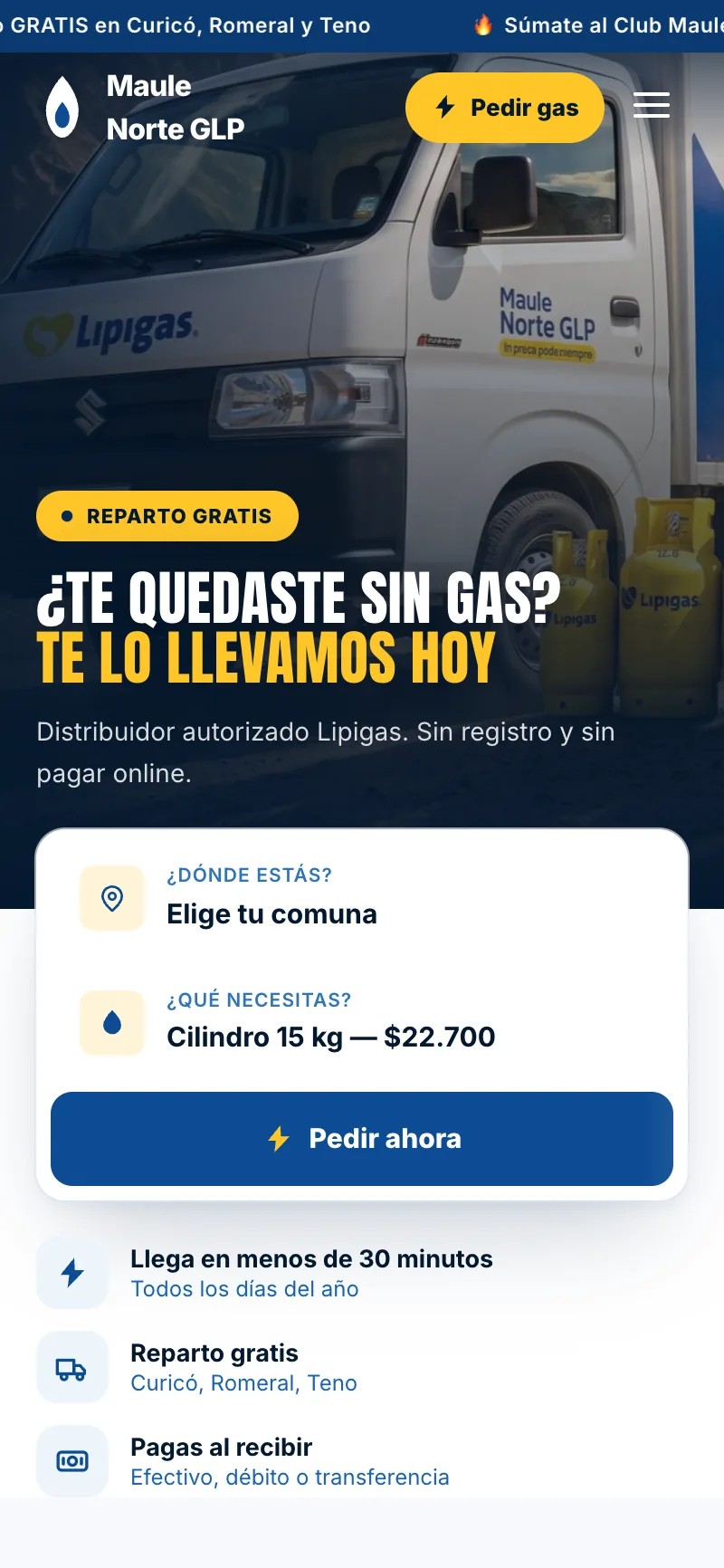
Tap it. No explanation needed.
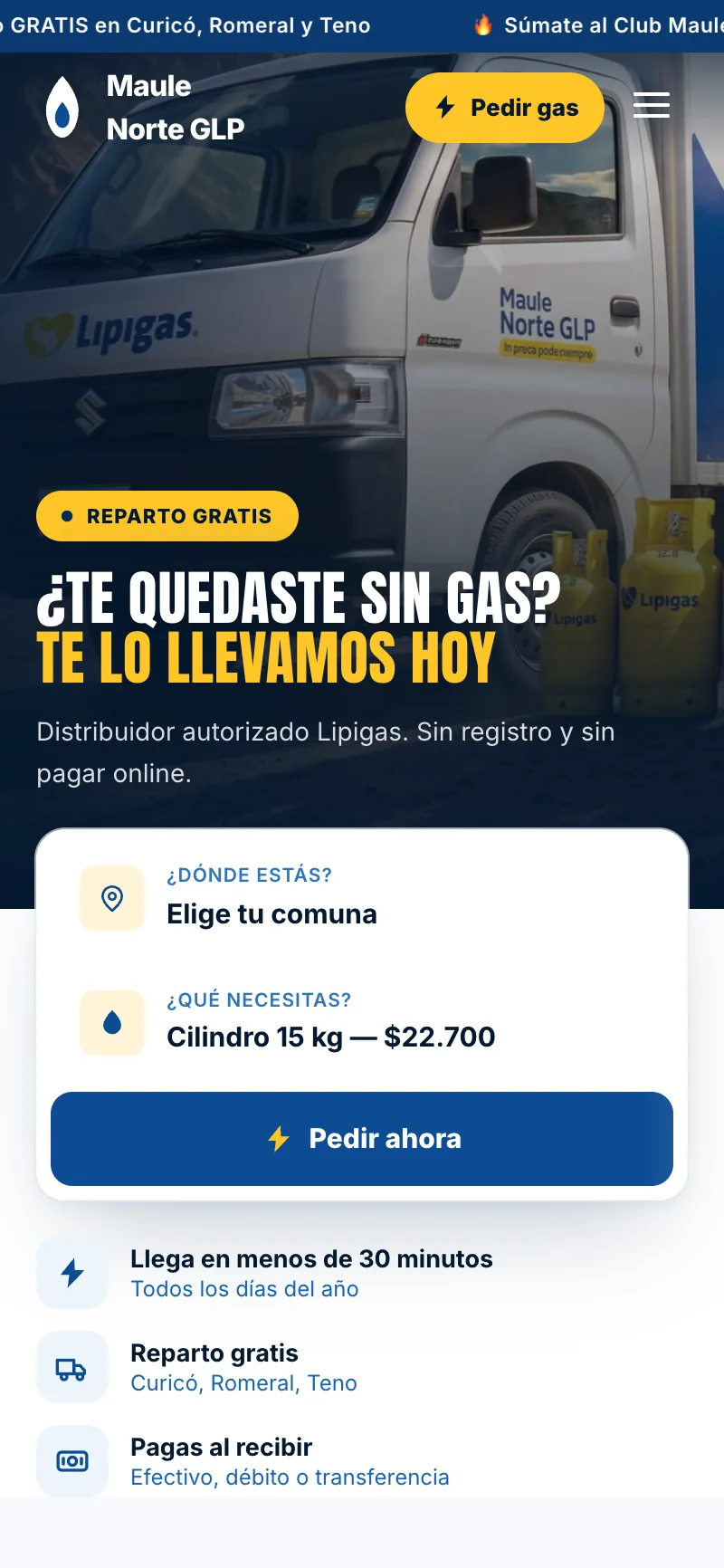
Escribes, esperas, preguntas el precio, esperas de nuevo.
Comuna y balón en la primera pantalla. El pedido sale en 30 segundos.
Customers ordered by phone call or WhatsApp. The operator got the message, asked which product they needed, checked the address, worked out the town to apply the right price, and only then handed the order to a driver, again by WhatsApp or phone. All of it depended on whoever happened to be answering.
- Time lost collecting the order details, message by message.
- Mistakes taking down addresses or identifying the product.
- Complete dependence on the operator: without him, there is no order.
- No traceability and no customer database.
- No way to measure conversions coming from digital campaigns.
- Pick your town. Mistakes working out prices by zone. The structure allows a different price per town without touching code.
- Four-step order form. Standardizes all the information before it reaches the operator, and checks the phone number and the address in the browser.
- Urgent or scheduled delivery. Separates the emergency order from the planned one, and takes pressure off the driver's route.
- The WhatsApp order writes itself. Typing out every order by hand and the back-and-forth of questions.
- Promo banner with an end date. The promo turns itself off on the end date; nobody has to remember to take it down.
- After-hours notice. The letdown of promising 30 minutes at 2 a.m. The order can still be sent: the point isn't to stop the sale, it's to set the expectation up front instead of after an hour waiting for the truck.
- A store on the same trip. A delivery run that goes out half empty. Bleach, detergent, candles and charcoal ride along with the gas: it's a whole store built on a logistics cost that was already paid for.
- A club with a badge per cylinder. Points programs that reward the big purchase. Here every cylinder earns a badge and three of them get you a free household product, with no odd redemptions and no fine print.
- Sign in with just your phone. The password nobody remembers. A code by text and you're in. And "order gas without an account" stays on screen: the club can't turn into a toll booth for buying gas.
The first version standardized the order. The second one found the business hiding inside the delivery run: the truck was already going, and the trip was being wasted.
- The order arrives standardized: same order, same fields, every time.
- The system works out the price by town, not the operator.
- The customer types his own address, with his own landmark.
- There is a measurable channel: every order fires an event traceable to the campaign that produced it.
- Scheduled orders stop competing with urgent ones.
- Delivery went from a cost to a channel: the same trip now also sells household products.
- There is a customer account with no password, and with it a history that didn't exist before.
- The club turns a purchase that's already recurring into a reason not to switch distributors.
The evidence of impact is missing: what share of orders comes in through the site and how much the order-taking time drops. And there's one loose end in plain view: almost every product in the store still shows a gray placeholder instead of a photo, and a store without photos sells far less than one with them.
The full case — every decision, what I ruled out and why, the whole stack — is written in Spanish.
Leer el caso completo en español →Got a process like this one?
You don't need to know the solution. The first conversation is about understanding what you repeat every day.