
Amateur football · Curicó
The club stopped depending on one person to exist online.
“If that one person is away, the site sits there showing last week's score.”
39
sign-ups received in 48 hours
66
players published across 4 divisions
27
approved and published
0
technical interventions needed to publish
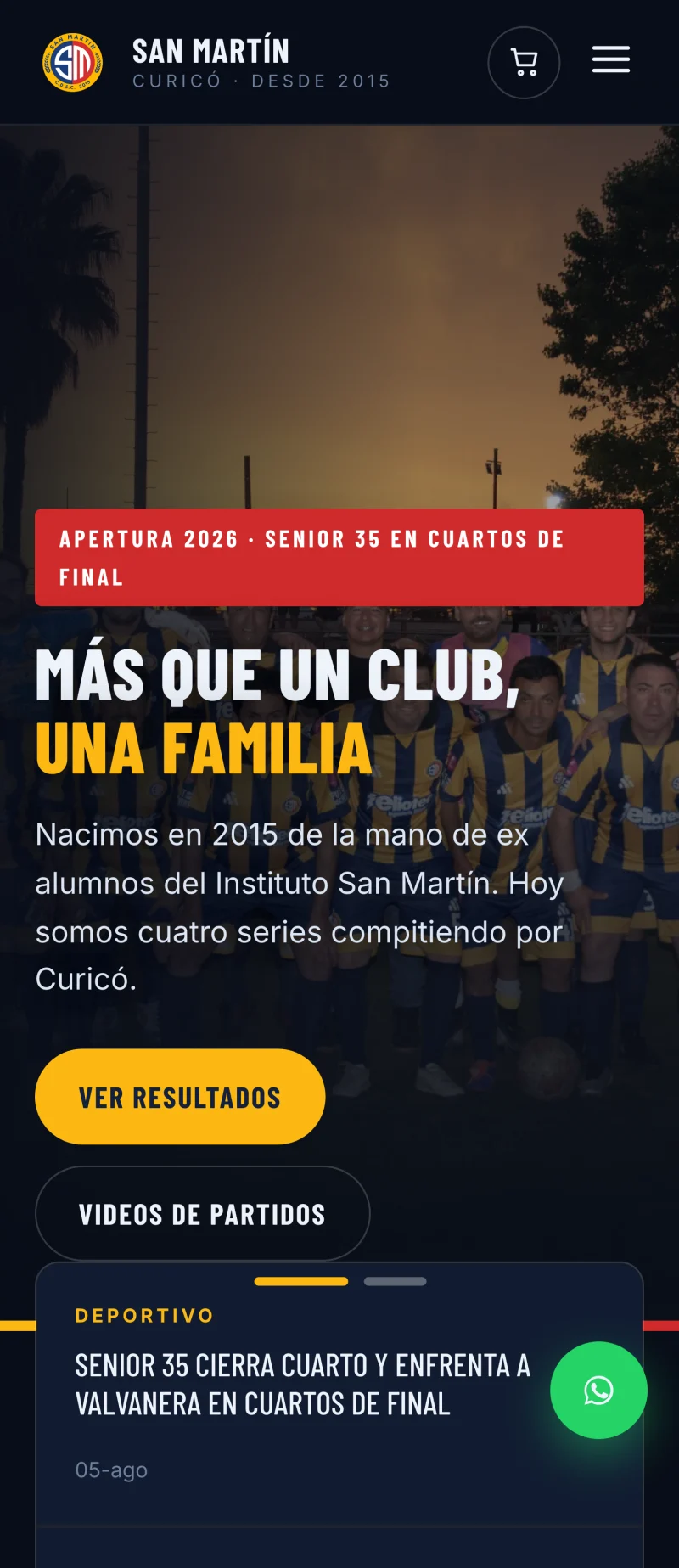

Amateur football · Curicó
There is no client testimonial, but the project folder still holds the tools they were using, and each one names the process it replaced: a three-sheet Excel file for statistics, a folder with 18 club crests used to build the standings table as an image, three versions of a stock-control spreadsheet and seven versions of an Elementor template.
- The same fact written three times. A goal lived in the results sheet, in the scorers sheet and on the roster card: three places where it can be wrong.
- The bottleneck was a person. If they weren't around, the site sat on the previous week's result.
- The photo was the work, not the data. Receiving, downloading, renaming and shrinking 60 photos is hours of somebody's day.
- Conflicting versions: three stock files and seven templates. Work got duplicated because there was no source anyone trusted.
- The site aged between matchdays. When publishing is expensive, you publish less.
- Match wizard, four steps. The three-sheet Excel file. You pick the match, enter the score and who scored: the table reorders itself, the scorer climbs the ranking and the player's stats change on his card.
- Public player sign-up. The WhatsApp → download → rename → shrink → retype cycle. The player opens it on his phone, types his name and takes the photo. The photo is resized on the phone before it's sent.
- Review and approve with one click. The retyping. The club sees the card, fixes whatever needs fixing and approves. The player is published on the spot.
- Roles with permissions: admin, division manager and press. The one-person bottleneck. A division manager enters his own matches and roster; press publishes news, store and gallery. The server checks the permission, not just the screen.
- Editable official standings table. The standings image built by hand, crest by crest, after every matchday.
- Protection against losing work. The risk of two people working at once wiping out each other's work. The system notices that someone else published in the meantime and says so instead of overwriting.
The strongest indicator available is the sign-up module, because it has a before and an after that can be measured inside the same system.
- The roster filled itself: from a handful of players to 66 cards across four divisions, 41 of them with a photo, without anyone retyping a thing.
- The quality filter opened up. Eleven sign-ups were rejected. Before, reviewing meant throwing away work already done; now rejecting costs one click, so the club can afford to be picky.
- The site moves. In three days of being live the club has published across 15 different collections, including a roster update at 11:17 p.m. — done by the club, without asking anyone for anything.
What's missing is how much time it saves per matchday, whether members, sales or sponsors went up, and whether the site helped land anything concrete. None of that can be invented, and it is exactly what would finish the case.
The full case — every decision, what I ruled out and why, the whole stack — is written in Spanish.
Leer el caso completo en español →Got a process like this one?
You don't need to know the solution. The first conversation is about understanding what you repeat every day.